
Class 7 English Worksheet on Tone Analysis

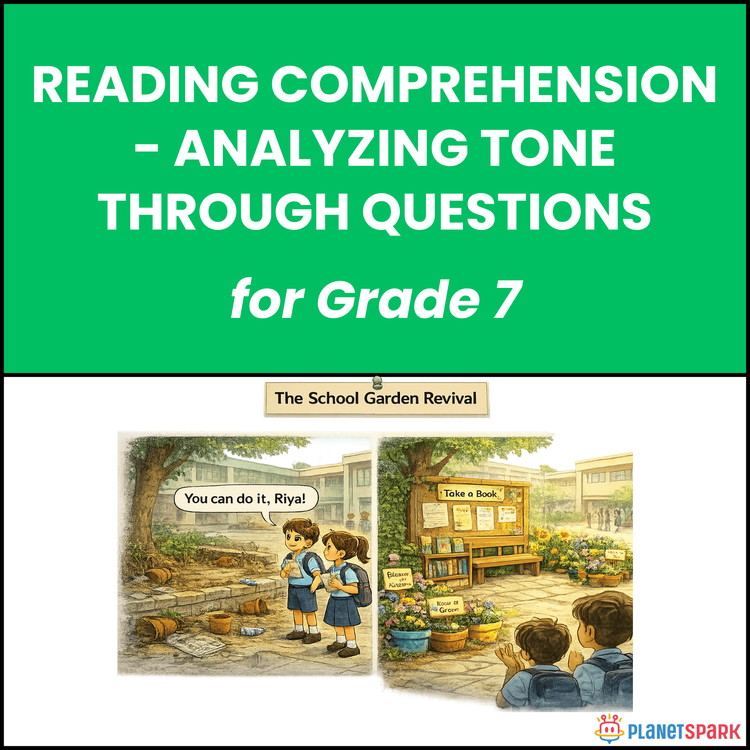
Class 7 English Worksheet on Tone Analysis
Master Analyzing Tone Through Questions: Grade 7 Reading Comprehension Worksheet
This Grade 7 worksheet is designed to help students develop strong reading comprehension skills by understanding tone, mood, and emotional meaning through a full passage. With a variety of engaging exercises, this worksheet provides essential practice for young learners.
In this worksheet, students will focus on identifying how emotions, attitudes, and word choices shape the story’s tone, with activities such as:
✔️ Multiple choice questions to identify tone, mood, and emotional shifts in the passage.
✔️ Fill-in-the-blank exercises using important words from the story.
✔️ True/False statements to test understanding of tone and emotional meaning.
✔️ Open-ended questions to explain how feelings and attitudes change in the story.
✔️ Paragraph completion to strengthen tone analysis and deeper reading skills.
This worksheet helps students understand how authors create mood, emotional shifts, and hopeful messages through characters, dialogue, and setting, improving comprehension, critical thinking, and literary interpretation.
Perfect for strengthening core English reading skills in a fun, structured, and practical way!
🔹 Answer Key (for parents and educators)
Exercise 1 – Choose the Best Answer:
1. a) Hopeful and caring.
2. b) Encouraging and warm.
3. c) Doubtful and dismissive.
4. a) Wise and gentle.
5. b) From neglect to hope and teamwork.
6. b) They create a welcoming feeling.
7. b) Supportive and practical.
8. c) Because it improves both mood and space.
9. a) Neglect and sadness.
10. c) Hopeful and inspiring.
Exercise 2 – Fill in the Blanks:
1. garden
2. signs
3. bench
4. teacher
5. Friday
6. patience
7. hope
8. plants
9. clean
10. sunlight
Exercise 3 – True or False:
1. True
2. False
3. True
4. False
5. True
6. False
7. True
8. False
9. False
10. True
Exercise 4 – Answer the Following Questions:
1. The beginning mood feels neglected and sad because the garden is full of dry plants, broken pots, and scattered wrappers, making it look forgotten. By the end, the mood becomes hopeful and positive because students work together to improve it.
2. Neha helps shift the tone by offering extra flower seeds from home. Her action shows support and teamwork, changing the feeling from doubt to encouragement.
3. At first, classmates laugh and create a doubtful and dismissive tone because they think nobody cares about plants. Later, they listen carefully and support the idea, creating a warmer and more hopeful mood.
4. Positive signs make the garden feel different because they create a welcoming and peaceful atmosphere. They encourage students to stop, notice the plants, and feel connected to the space.
5. Teamwork changes the mood by turning the project into a shared effort instead of one student’s idea. This creates a stronger feeling of hope, unity, and success.
6. The neglected garden creates feelings of sadness, neglect, and disappointment because it looks dry, broken, and forgotten by everyone.
7. Nikhil’s change mattered because when someone who laughed earlier began supporting the project, it showed that people were starting to believe in the idea and respect it more.
8. The project improved school culture by making the environment more peaceful, beautiful, and positive. It also encouraged teamwork and responsibility among students.
9. The grandfather’s advice sounds wise instead of strict because he speaks calmly about patience, growth, and lasting change instead of giving orders or criticism.
10. The hopeful tone gives readers the message that small caring actions can create lasting change, and one person’s effort can inspire many others to help.
Exercise 5 – Complete the Passage:
1. garden
2. signs
3. bench
4. teacher
5. patience
6. sunlight
7. plants
8. clean
9. hope
Help your child strengthen tone analysis skills and build confidence in understanding emotional meaning through reading.
Book a free trial!
Frequently Asked Questions
They help students recognize the writer’s attitude and emotions, improving interpretation and deeper understanding of reading passages.
Understanding tone helps learners identify whether a passage feels serious, humorous, critical, or supportive, shaping the full message.
They should focus on word choice, descriptive details, and sentence style to understand the feelings behind the writing.