
Class 7 Worksheet on Figurative Meaning Skills

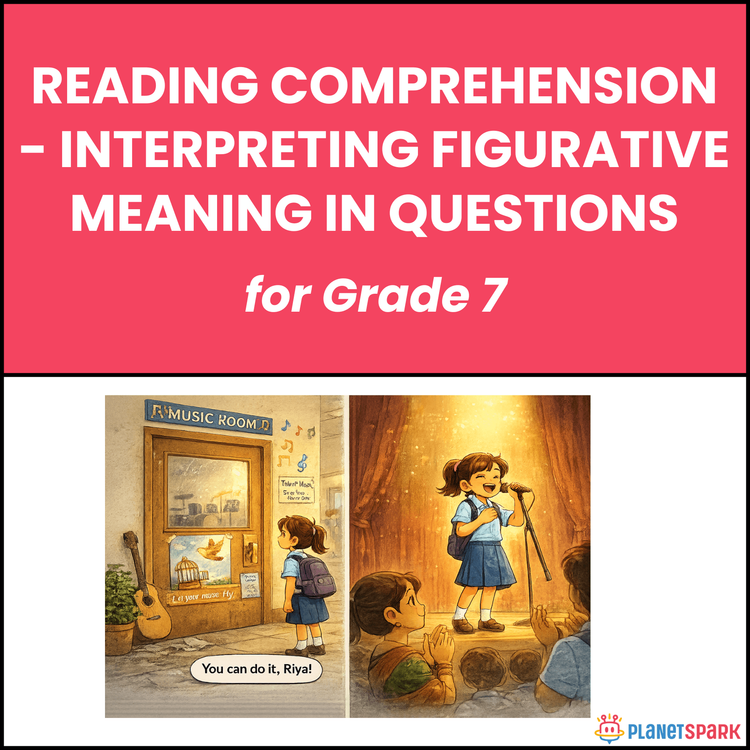
Class 7 Worksheet on Figurative Meaning Skills
Finding Confidence Through Figurative Language: Grade 7 Reading Comprehension Worksheet
This Grade 7 worksheet helps students strengthen reading comprehension by interpreting figurative language, understanding symbolic expressions, and identifying hidden meanings in a story. Based on the topic Reading Comprehension – Interpreting Figurative Meaning in Questions, this worksheet uses engaging exercises to help learners move beyond literal understanding and explore deeper emotional meaning through comparisons, metaphors, and imagery.
Why Figurative Meaning Matters in Reading?
Figurative language helps writers express feelings and ideas in a stronger and more memorable way. For Grade 7 learners, this topic is important because:
1. It helps students understand metaphors, similes, and symbolic expressions.
2. It improves interpretation of emotions and character development.
3. It builds stronger comprehension beyond surface-level reading.
4. It supports better literary analysis and deeper thinking in reading tasks.
What’s Inside This Worksheet?
This worksheet includes five reading-rich activities that build confidence with figurative meaning:
🧠 Exercise 1 – Multiple Choice Questions
Students choose the correct meaning behind figurative expressions such as “room had its own heartbeat,” “fear is only a shadow,” and “stop feeding fear.” This helps them understand how writers use comparisons to create emotion and meaning.
✏️ Exercise 2 – Fill in the Blanks
Students complete sentences using words like heartbeat, window, shadow, light, stage, courage, and fear. This reinforces important symbolic vocabulary from the passage.
📋 Exercise 3 – True or False
Students decide whether each statement correctly explains the figurative meaning in the story. This improves careful reading and understanding of hidden meanings.
📝 Exercise 4 – Answer the Questions
Students answer open-ended questions explaining why music is called a “window to breathe,” what the trapped bird represents, and how applause like rain changes the mood. This builds evidence-based explanation and literary thinking.
✅ Exercise 5 – Paragraph Writing
Students complete the paragraph “Finding Her Voice” using suitable words from the passage. This helps them summarize the story while applying figurative vocabulary in context.
✅ Answer Key (For Parents & Educators)
Exercise 1 – Multiple Choice Questions
1. a) The room felt alive with music
2. a) Music gave her relief
3. a) She felt shy and stuck
4. a) Sing with confidence
5. b) Fear is not as strong as it seems
6. a) She was nervous and unsure
7. a) The lights felt intense and strong
8. a) The clapping felt heavy and refreshing
9. a) Stop making fear stronger
10. a) Courage grows with confidence
Exercise 2 – Fill in the Blanks
1. heartbeat
2. window
3. shadow
4. light
5. voice
6. stage
7. rain
8. courage
9. fear
10. music
Exercise 3 – True or False
1. True
2. False
3. True
4. False
5. True
6. False
7. False
8. True
9. True
10. False
Exercise 4 – Answer the Questions
1. Music is called a window to breathe because it gave Riya peace and relief when school pressure felt too heavy.
2. The trapped bird represents Riya’s fear, nervousness, and lack of confidence.
3. Kabir says “let it fly” because he wants Riya to sing with confidence and stop holding herself back.
4. “Fear is only a shadow” teaches that fear looks bigger than it really is and loses power when we face it.
5. Stage lights are compared to the sun because they felt bright, strong, and intense, making Riya feel nervous.
6. “Stop feeding fear” teaches that fear grows stronger when we keep giving it attention instead of facing it.
7. Applause like rain changes the mood by making the ending feel refreshing, peaceful, and rewarding after nervousness.
8. Figurative language improves the story by creating stronger emotions and helping readers feel Riya’s journey more deeply.
9. By the end, Riya changed from being nervous and unsure to becoming calm, confident, and brave enough to sing.
10. The main message of the story is that courage grows when we face fear with confidence and stop letting fear control us.
Exercise 5 – Paragraph Writing
1. heartbeat
2. music
3. voice
4. shadow
5. light
6. stage
7. rain
8. courage
9. fear
10. confidence
Help your child master figurative meaning skills and build stronger reading confidence through deeper story understanding.
🔖Book a free trial!
Frequently Asked Questions
They teach students to understand similes, metaphors, and hidden meanings, improving deeper reading comprehension and interpretation skills.
Because they often read phrases literally and miss the deeper meaning the writer is trying to express through comparison.
They can discuss common expressions and ask children what the writer really means beyond the direct words used.